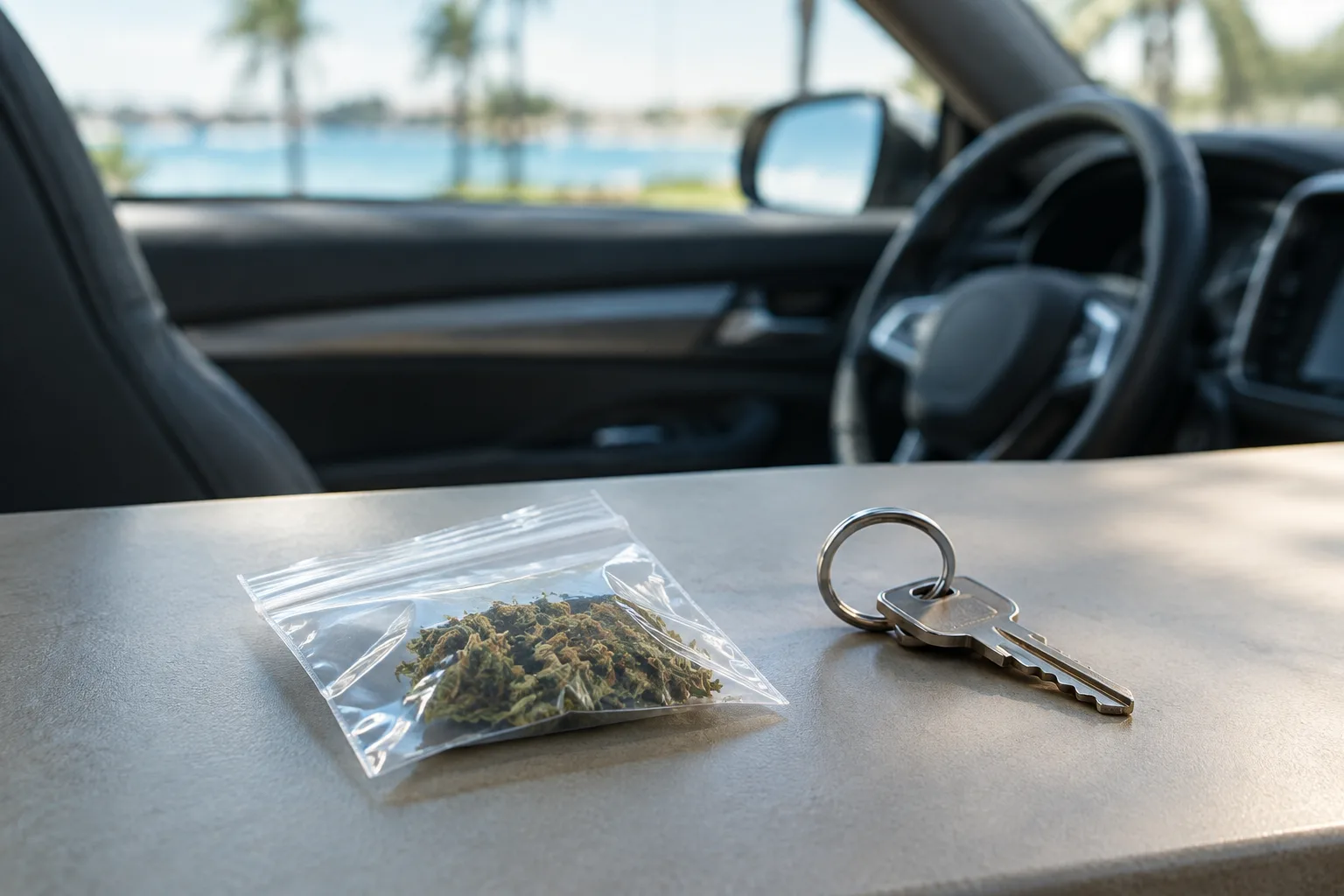

A person visits a friend, rides in a car, or is at a gathering when police discover suspected drugs. They may not have touched or even known about the substance, yet officers may ask about their role or make an arrest. Can someone be charged with a Florida drug crime just for being present? In Fort Lauderdale, Florida, the key issue is generally not simply where a person stood, but what evidence may connect that person to the alleged conduct. Michael D. Weinstein, PA helps people understand the distinction between proximity and alleged participation. This article explains what presence alone may mean, what conduct can raise questions about assistance or participation, and what evidence may be reviewed after an arrest.
Can someone be charged with a Florida drug crime just for being present?
Being at a location where drugs are found does not, by itself, establish that every person there committed a drug offense. Still, an arrest or charge may follow if investigators believe other evidence connects a person to the alleged activity. The precise facts matter, and a charge is an accusation—not a finding of guilt.
Florida law can impose responsibility on someone who intentionally helps or encourages another person’s crime. That is different from simply being nearby, knowing someone accused of an offense, or sharing a space where drugs are discovered. Investigators and prosecutors may examine what the person knew, what they did, and whether their conduct appears to have assisted the alleged crime. At trial, the prosecution must prove the required elements beyond a reasonable doubt.
Does being near drugs prove possession?
Not necessarily. In a shared car, residence, or other common area, the presence of drugs alone may not show who knew about them or exercised control over them. Other facts can matter, including access, statements, conduct, and the location of the substance. For a closer look at this issue, read how shared-car drug evidence can affect a possession case.
The same distinction applies to other items investigators associate with drug activity. Cash, scales, or packaging do not automatically belong to or implicate every person present; context and the link to a particular individual matter. See when cash and scales may be cited as evidence of drug-sale intent.
What evidence might suggest participation in a Florida drug case?
A case involving alleged assistance or participation usually turns on the evidence connecting a particular person to the alleged conduct. Investigators may consider direct evidence—such as a person arranging a meeting—or circumstantial evidence, such as coordinated actions or statements. No single circumstance necessarily resolves the question; its meaning depends on the full context.
Examples of evidence that may be examined include:
- Actions at the scene: Did the person allegedly handle, transfer, conceal, or guard drugs, or help arrange the activity?
- Communications: Do messages or calls appear to show advance knowledge, coordination, or an agreement? Their meaning and how they were obtained can be disputed. An arrest alone does not automatically authorize access to a phone; consider whether police can search a phone after a Florida drug arrest.
- Statements by other people: Did a witness or informant identify the person or describe a role? The reliability of the account and whether other evidence supports it can matter. Read more about how informant statements may be evaluated in a Florida drug case.
- Items and access: Were relevant items tied to the person, or were they in a place accessible to several people?
The presence of an accusation, message, or item does not automatically prove intentional help. A careful review considers what each piece of evidence actually shows and whether there are reasonable alternative explanations.
What should someone review after a Fort Lauderdale drug investigation?
A person questioned or arrested after an incident may be uncertain about what officers believe they did. In Fort Lauderdale and elsewhere in Broward County, the specific evidence, the place searched, and the sequence of events can all be relevant. The criminal case may proceed through the Broward County court system, but the basic question remains whether evidence supports the allegation against that individual.
Depending on the circumstances, a defense review may examine:
- The alleged role: What specific act is said to show assistance, encouragement, or participation, rather than mere presence?
- The location and search: Where were the drugs or other items found, who could access that place, and did the search stay within its authorized scope? For context, see the limits on a Fort Lauderdale drug-warrant search.
- The source and reliability of evidence: Do witness accounts, recordings, messages, or physical evidence support one another, or are important details uncertain?
- The full timeline: What happened before, during, and after officers arrived? A brief observation may not capture the entire event.
Avoid assuming that an arrest proves participation or that a lack of physical contact ends the inquiry. Depending on the circumstances, an attorney may assess the allegations, explain the process, and identify questions about how evidence was gathered and interpreted. Anyone seeking case-specific guidance can review options for Fort Lauderdale drug defense representation.
Frequently Asked Questions
Can I be charged if I did not know drugs were there?
A lack of knowledge may be an important issue, but the answer depends on the charge and the evidence. Prosecutors may rely on circumstances they say show what a person knew or intended. Being at the scene alone does not answer that question. A lawyer reviewing the case may assess statements, conduct, access to the location, and other facts that could support or challenge the allegation.
Can a witness statement alone lead to charges?
A witness account may prompt an investigation or contribute to a charging decision, but its significance depends on the circumstances and any supporting evidence. The account’s consistency, basis of knowledge, and connection to other evidence may be examined. An allegation is not the same as proof at trial. The rules and procedures that apply depend on the case and Florida law.
Does being invited to a home make me responsible for drugs found there?
An invitation or presence in a home does not automatically make a visitor responsible for drugs found there. Relevant questions may include who controlled the area, who knew about the substance, and whether the visitor allegedly did anything to assist the activity. Shared access can make the evidence more complicated, so the details of the location and each person’s conduct matter.
What happens after a Fort Lauderdale drug arrest?
The next steps depend on the allegation and individual circumstances. A case may involve court appearances, review of evidence, and decisions about how to respond to the charge. Local matters may proceed in the Broward County court system. A defense attorney can explain the process that applies, review the available materials, and discuss potential issues without promising a particular result.
How Michael D. Weinstein, PA Can Help
Michael D. Weinstein, PA is dedicated to examining the evidence behind a Florida drug allegation, including whether it shows intentional participation or only presence at a scene. The firm can evaluate how investigators connected a person to the alleged conduct, consider questions about witness accounts, communications, and searches, and explain possible next steps based on the circumstances. No two cases are identical, and results cannot be promised. If you are facing questions or charges after being present during alleged drug activity in Fort Lauderdale, contact the firm to discuss a consultation and have your situation evaluated.
The information in this article is for educational purposes only and does not constitute legal advice. Contact a qualified attorney authorized to practice in the jurisdiction that applies to your matter for advice specific to your situation.