
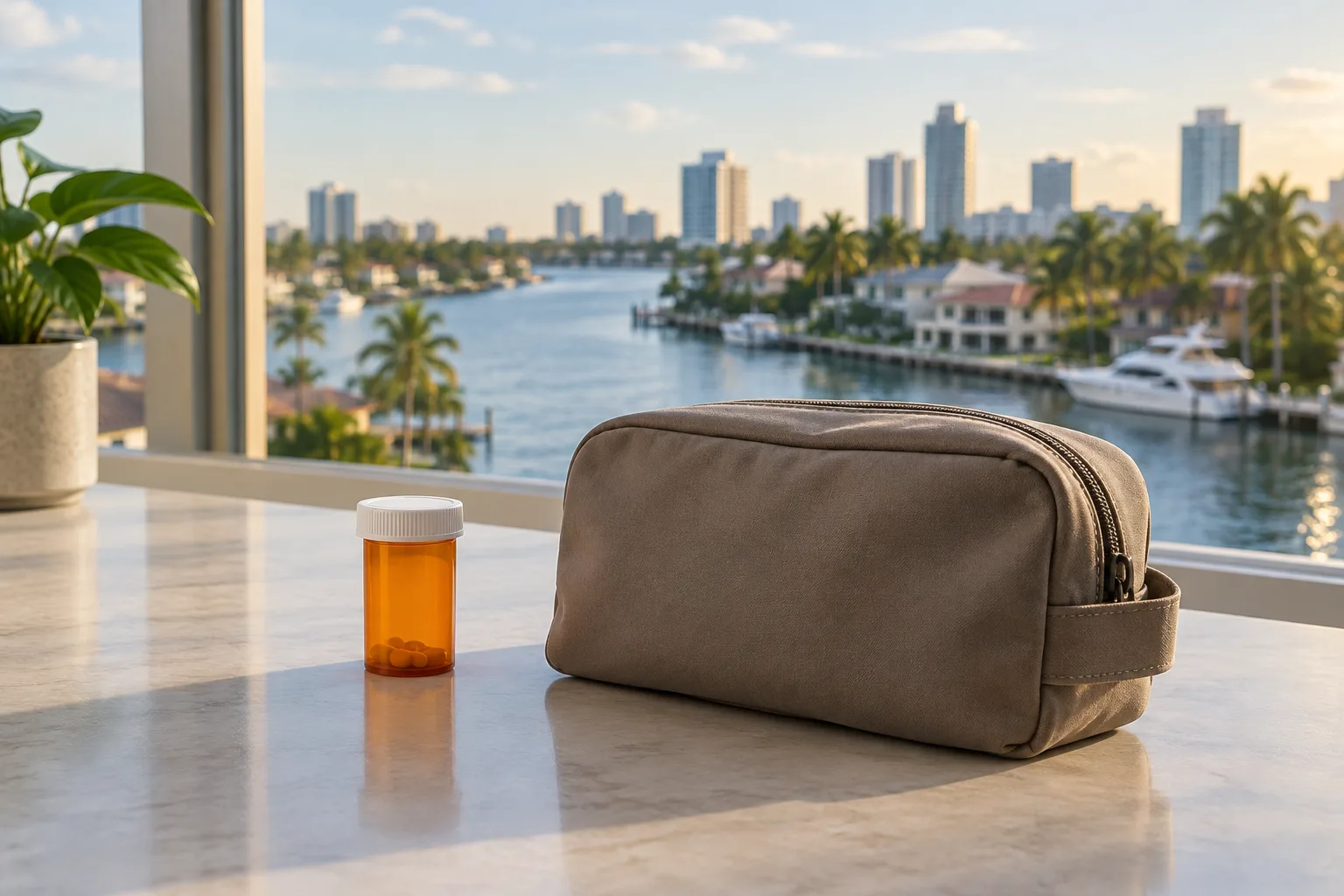
A prescription bottle in a bag or car may seem to settle the question of whether medication was lawfully possessed. But in a Florida prescription drug possession charge, the label is only one part of the picture. The prescription generally needs to belong to the person possessing the medication, and the circumstances may raise separate questions about access, knowledge, or how police found it. In Fort Lauderdale, Florida, Michael D. Weinstein, PA helps people understand the issues that may arise in a drug case and what information could be relevant. This article explains what a prescription can show, what records and circumstances may need review, and why a prescription does not automatically resolve every allegation.
When can a prescription help with a Florida drug possession charge?
Florida law generally allows a person to possess controlled medication when it is lawfully prescribed or otherwise authorized for that person, subject to applicable requirements. A prescription can therefore be important evidence: it may help establish that the medication was authorized for the patient and that the person had a lawful reason to possess it. The details matter, however. A bottle bearing a patient’s name does not automatically answer every question about the medication, the person holding it, or the situation in which officers found it.
Who was the medication prescribed to?
The first question is often whether the prescription was issued to the person accused of possessing the medication. A prescription belonging to a family member or friend does not generally authorize someone else to possess that controlled medication. A person may have been carrying it for a practical reason, but that fact alone does not establish that the possession was authorized. The exact medication, prescription status, and circumstances may all be relevant.
Who possessed the medication?
Where the medication was found may matter, especially if several people had access to the same space. Investigators may look at whether the person knew the medication was there and had the ability to control it; simply being nearby may not resolve those questions. For example, how drugs found in a shared car can raise possession questions is relevant when medication is found in a vehicle used by more than one person. In Fort Lauderdale, Florida, the facts surrounding access and control can be as important as the label itself.
What records and search details may matter in Fort Lauderdale?
A prescription is most useful when it can be considered alongside reliable records and the circumstances of the alleged possession. Depending on the case, relevant information may include:
- The prescription label and the name of the patient.
- Pharmacy or prescriber records that help confirm the medication and authorization.
- The medication’s packaging, quantity, and condition when it was found.
- Where it was located and who could access that place.
- Any statements or other evidence about who used or controlled it.
These materials do not automatically prove or disprove an allegation. For example, a pharmacy record might confirm that a prescription was issued, while leaving separate questions about whether the medication found was covered by it or who possessed it at the relevant time. Records can also be incomplete, inconsistent, or difficult to interpret without context. The way officers discovered the medication may raise a distinct issue from whether it was prescribed.
For a search in a Fort Lauderdale home or room, the scope of any warrant and the place and items it authorized officers to search may be important. A warrant does not necessarily permit a search of every location for every purpose; its language and the circumstances of the search require careful review. Readers can find more about limits on the scope of a Fort Lauderdale drug warrant. Criminal matters arising in Fort Lauderdale are generally handled within Broward County’s Seventeenth Judicial Circuit, though the proper court and process depend on the case. Florida law and procedures may change, so local legal guidance should reflect current rules.
If the prescription does not end the case, what happens next?
Even when a prescription appears valid, the state may still allege that the person lacked authorization, possessed medication prescribed to someone else, or knowingly controlled medication found in a shared place. The allegation and evidence must be considered as a whole. That can include whether the medication matches the prescription, what the records establish, what officers observed, and whether statements or search evidence create additional questions.
People can unintentionally complicate their situation by assuming that a bottle label alone will resolve everything, guessing about medication details, or making statements before they understand what the allegation involves. This is not a reason to panic; it is a reminder that apparently small details may be interpreted differently in a criminal investigation. An attorney reviewing a case may examine available prescription and pharmacy records, the location and handling of the medication, and how law enforcement obtained it. The attorney may also assess whether the evidence supports the specific allegation and whether any legal issues warrant further attention.
If a case continues, possible paths depend on the charge, the evidence, the person’s circumstances, and applicable program rules. An arrest does not mean that a person automatically qualifies for a diversion program or drug court. Someone researching Broward County drug court eligibility after an arrest should understand that eligibility is case-specific and participation is not assured. A Fort Lauderdale prescription drug defense review can help clarify which facts are established and which questions remain open.
Frequently Asked Questions
Does a prescription bottle prove that the medication was legally possessed?
Not by itself. A label may help identify the patient and medication, but it may not establish who possessed the medication, whether the prescription was current or applicable, or how the medication came to be where officers found it. Other records and circumstances can matter. The significance of a bottle depends on the allegations and the available evidence in the individual case.
Can I be charged for carrying medication prescribed to someone else?
A prescription issued to another person generally does not authorize you to possess that person’s controlled medication. However, the precise circumstances, the type of medication, and the evidence of knowledge or control may affect how an allegation is evaluated. A lawyer can review the facts and explain how Florida law may apply; this general information cannot determine the outcome of a particular case.
What if the medication was in a shared home or car?
A shared location can create questions about who knew the medication was present and who could exercise control over it. Being in the same home or vehicle does not, by itself, explain who possessed a particular item. The location, access, statements, and other evidence may be considered together. The analysis depends on the facts, including where the medication was found and who used that space.
Could a search issue matter even if the medication was prescribed?
Yes. Whether a medication was authorized and whether officers lawfully discovered it are separate questions. The reason for the search, any warrant’s scope, and the way the search was carried out may be relevant, depending on the circumstances. A lawyer can assess those issues in light of the available records and Florida law. The fact that a prescription exists does not automatically resolve a separate search question.
How Michael D. Weinstein, PA Can Help
Michael D. Weinstein, PA is dedicated to helping people understand the issues raised by Florida drug allegations. A review may consider who the prescription was issued to, what pharmacy or prescriber records show, where the medication was found, and how law enforcement obtained it. No two cases are identical, and a prescription does not guarantee a particular legal result. For information about Fort Lauderdale drug defense representation, contact the firm to discuss your circumstances. The team is ready to evaluate your situation and explain potential next steps. Contact Michael D. Weinstein, PA to request a consultation or case evaluation.
The information in this article is for educational purposes only and does not constitute legal advice. Florida laws may change and laws vary by location; contact a qualified attorney licensed in Florida for advice specific to your situation.