A person facing a drug investigation may wonder whether everyday items—cash in a wallet, small plastic bags, or a kitchen scale—can turn a possession allegation into a claim that drugs were meant for sale. In Fort Lauderdale, these objects may appear in a prosecutor’s account of the evidence, but the central question remains what the evidence as a whole can establish. A Fort Lauderdale drug defense lawyer can help explain how the specific allegations and evidence may be evaluated.
Florida possession with intent to sell drugs is not established merely because an item that could have an ordinary use is found nearby. Prosecutors may point to several circumstances together, while the defense may examine whether those circumstances support the inference being proposed. This article explains how cash, packaging, scales, and other evidence may be interpreted, what context can matter, and why an item’s presence does not by itself resolve a charge. It offers general information for people seeking to understand a drug-sale allegation in Fort Lauderdale and Broward County.
How Florida possession with intent to sell drugs allegations use circumstantial evidence
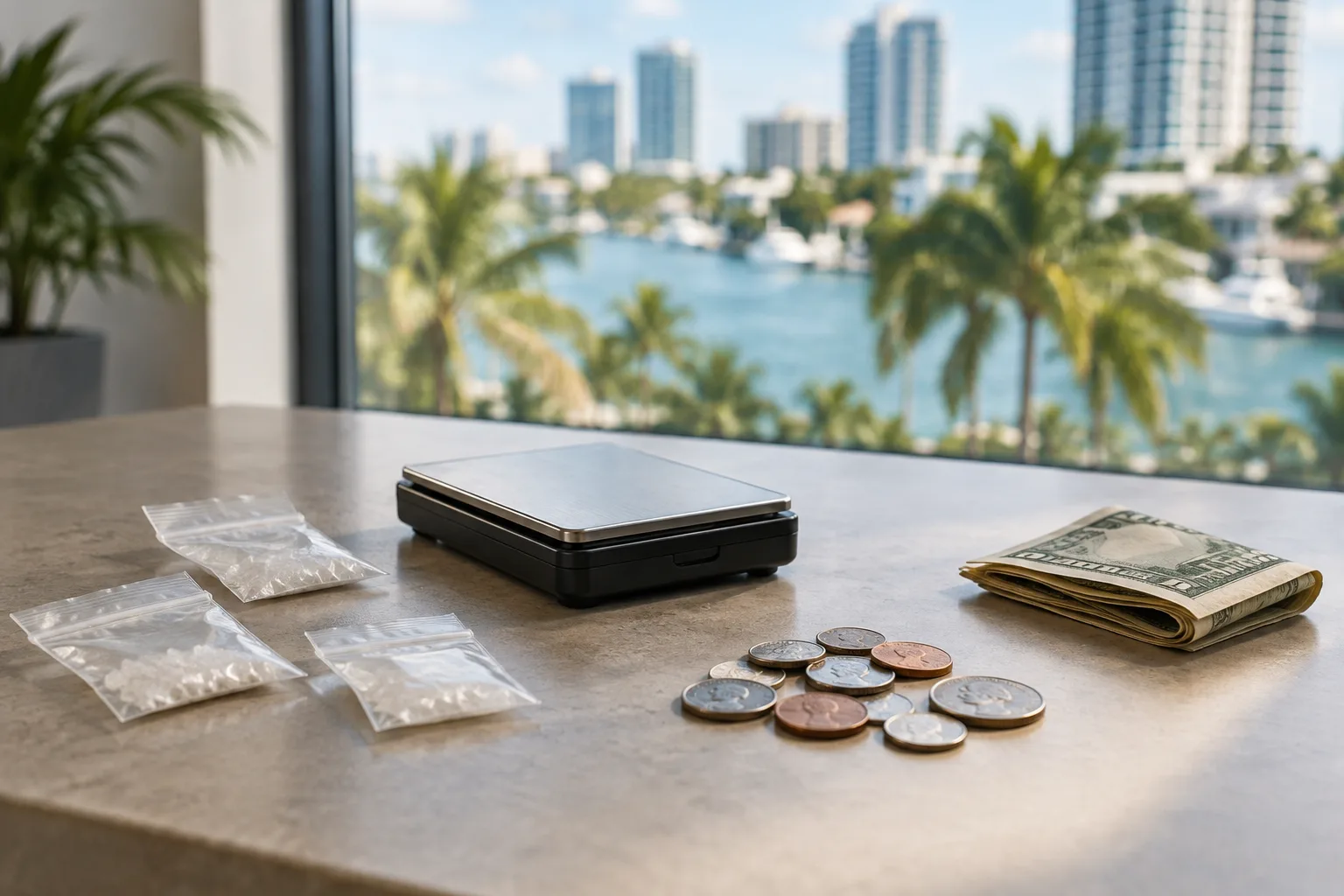
An alleged sale is not always supported by a direct observation or a completed transaction. Prosecutors may rely on circumstantial evidence—facts from which they ask a judge or jury to draw an inference about a person’s knowledge or intent. Cash, baggies, scales, the amount and form of a substance, communications, and observations may be presented together. None of those categories automatically answers what a person intended; their significance depends on the facts and the applicable law.
Why scales, baggies, and other items may be cited
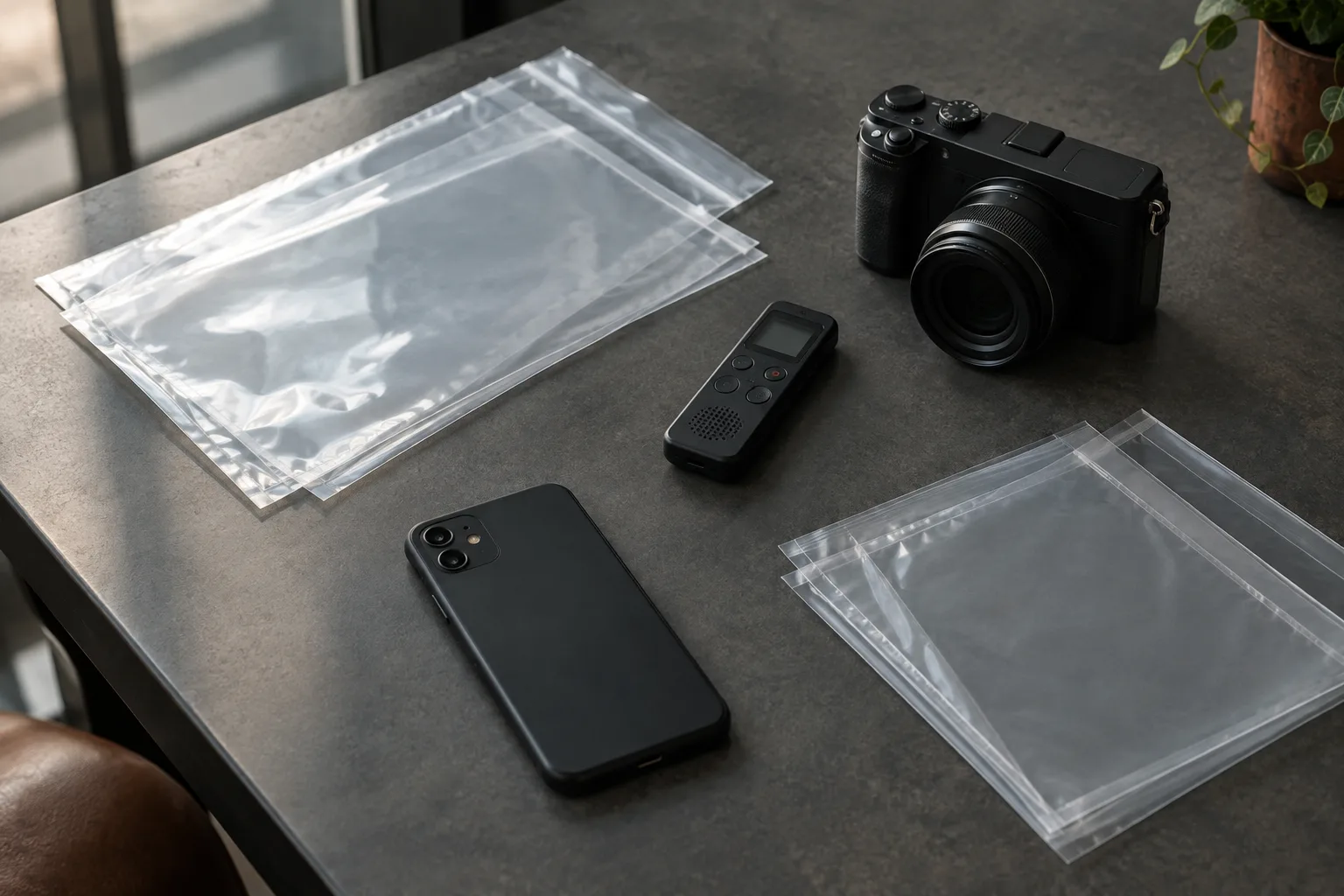
Small bags can be associated with packaging, and a scale can be associated with weighing. Prosecutors may argue that those objects, especially alongside other evidence, are consistent with preparation for distribution. But each item can also have an ordinary explanation, and its presence does not by itself establish that drugs were packaged for sale. The condition, location, accessibility, and connection of an item to the person accused may all matter.
A separate paraphernalia allegation is also distinct from the question of intent to sell. For more background on Florida drug paraphernalia allegations involving common items, readers can consider how the item-related issue differs from what the state must prove about an alleged sale.
Why the surrounding circumstances matter
The location of an item and who could access it may affect how it is interpreted. For example, an object found in a shared room or vehicle may not automatically show who knew about it or controlled it. Evidence about access, ownership, knowledge, and control can be relevant to that question. The analysis of who knew about or controlled drugs found in a shared car illustrates why proximity alone may not tell the whole story.
What cash and other evidence may mean in a Fort Lauderdale drug case
Cash may draw attention when officers investigate a suspected drug sale, particularly if prosecutors argue that its amount, packaging, or location fits other evidence. But cash is used for many lawful purposes. Its presence alone does not prove that it came from drug sales or that a person intended to sell a controlled substance. The source, ownership, location, and surrounding circumstances may all affect how the evidence is understood.
A possible effort to seize or retain money raises a separate property issue from whether the cash helps prove a criminal allegation. Readers can find more information about what may happen when cash is seized after a Fort Lauderdale drug arrest. Seizure itself should not be treated as proof of guilt or intent to sell.
Other evidence may be presented to support or challenge the state’s interpretation. Depending on the case, that could include the quantity or packaging of the substance, communications, witness accounts, surveillance, or statements attributed to the accused. A witness or informant’s account may raise questions about what was observed, reliability, and corroboration; see more about how informant accounts may be assessed in a Florida drug case.
In Fort Lauderdale, drug cases may proceed through the Broward County court system, with the specific process depending on the charge and circumstances. The state must prove the charged offense under the applicable Florida law. The evidence may be disputed, and what a particular item tends to show is not the same as a final determination of guilt.
What to consider when a drug-sale allegation is made
Drug cases can involve several distinct questions: whether the substance is identified and tested, whether it was possessed by the accused, whether a search or seizure complied with applicable rules, and whether the evidence supports the alleged intent. The answers depend on the facts and legal issues in the individual case. In Broward County, an attorney reviewing a case may examine reports, recordings, physical evidence, and the circumstances in which officers found or collected the items.
Common assumptions can obscure the actual issues. For example:
- The presence of cash does not, by itself, establish that it came from a sale.
- A scale or baggies may have more than one possible explanation.
- Being near drugs or related items does not automatically establish knowledge, control, or intent.
- An officer’s interpretation of an item is evidence to assess, not the same thing as a court’s finding.
Statements and electronic communications may also be relevant, so the surrounding context and how evidence was obtained can matter. A lawyer may assess whether the evidence is being interpreted accurately, whether it is connected to the person charged, and whether legal challenges are available. Those issues are fact-specific; general information cannot determine how a particular case will be resolved.
Frequently Asked Questions
Do baggies automatically prove intent to sell drugs in Florida?
No. Baggies may be presented as one circumstance in a Florida drug case, but their presence alone does not establish that a person intended to sell drugs. Prosecutors may ask a factfinder to consider packaging alongside other evidence, such as the substance, communications, or observations. The meaning of the item depends on its setting and connection to the accused, as well as the other facts in the case.
Can cash found during a search be used as evidence of a drug sale?
Cash may be offered as circumstantial evidence, but having cash does not by itself prove that it came from drug sales or establish intent to sell. Its amount, location, ownership, and relationship to other evidence may be considered. A cash seizure may also raise a separate property-forfeiture issue, which is different from the question of whether a criminal charge can be proved.
Does owning a scale mean someone intended to sell drugs?
No. A scale can have ordinary uses, and owning one does not by itself prove intent to sell a controlled substance. Prosecutors may argue that its presence supports an inference when considered with other evidence, but its location, use, and connection to the alleged drugs may matter. The significance of a scale is determined in the context of the full case, not from the object alone.
Where are Fort Lauderdale drug charges handled?
Fort Lauderdale is in Broward County, and criminal cases arising there generally proceed through the Broward County court system. The court and process involved can depend on the specific charge and case circumstances. Because procedures and applicable law can change, a person seeking guidance about a particular allegation may wish to speak with an attorney licensed in Florida who can review the relevant facts.
How Michael D. Weinstein, PA Can Help
Michael D. Weinstein, PA is dedicated to helping people understand the allegations and evidence in Florida drug cases. A careful review may consider how cash, packaging, scales, statements, and other circumstances are connected—or whether the state’s interpretation leaves important questions unanswered. The firm is committed to fighting for clients’ rights and can evaluate the issues raised by a specific Fort Lauderdale or Broward County case. If you are facing a possession-with-intent allegation, contact Michael D. Weinstein, PA to request a free consultation or case evaluation and discuss your situation.
The information in this article is for educational purposes only and does not constitute legal advice. Contact a qualified attorney authorized to practice in the jurisdiction that applies to your matter for advice specific to your situation.