
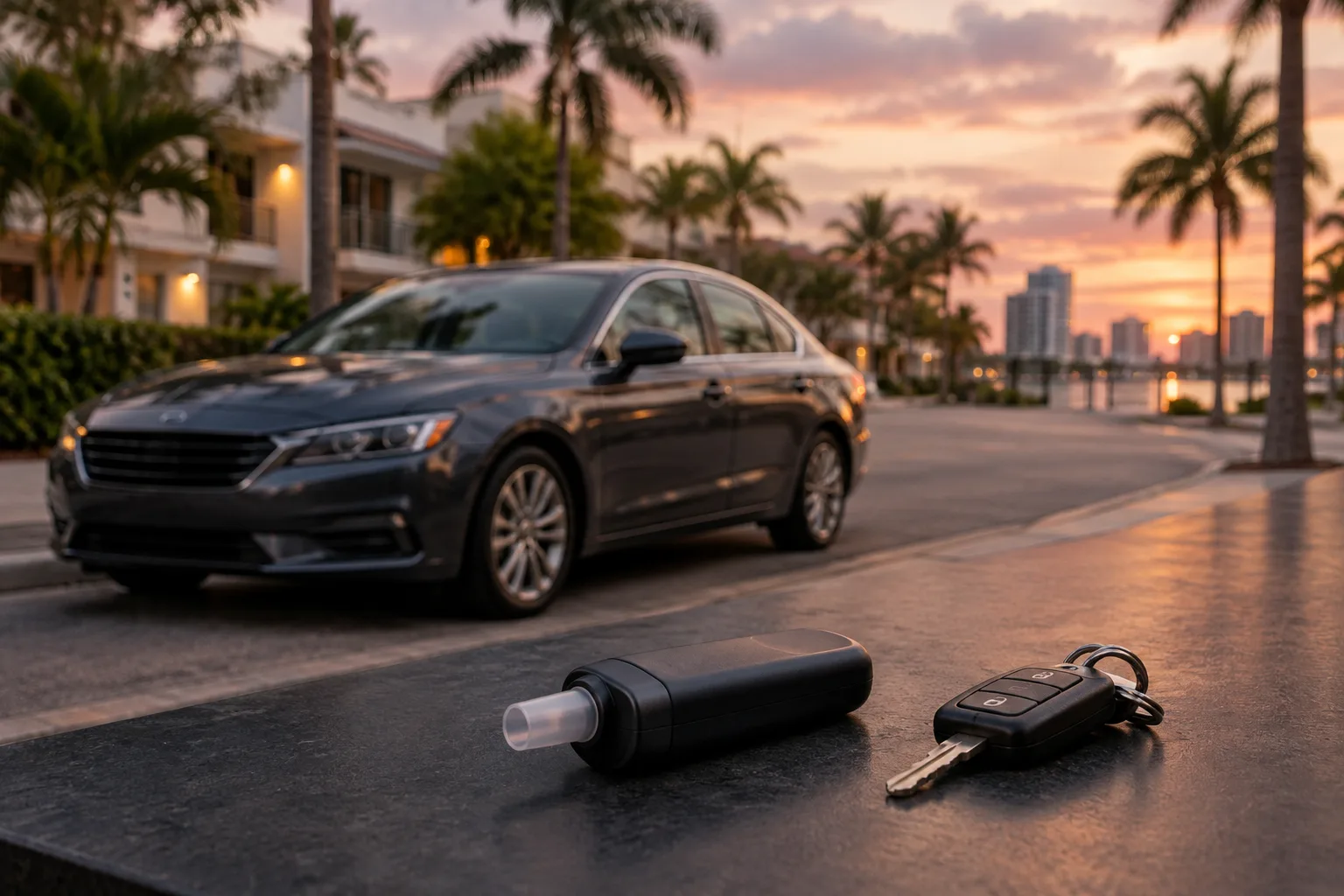
A reported breath or blood alcohol concentration of .15 or higher can change the penalties a person may face after a Florida DUI conviction. For someone looking into Florida DUI .15 BAC penalties in Fort Lauderdale, the key is understanding both the enhanced consequences and the limits of what a test result proves. A reported number alone does not determine the full outcome.
Michael D. Weinstein, PA helps people understand how the charge, test evidence, and other circumstances fit together. This article explains how Florida law treats a .15-or-higher result, what fines and ignition-interlock requirements may apply, and why the underlying records and exact charge matter. The discussion concerns Florida law; requirements and procedures can vary by location and may change.
Florida DUI .15 BAC penalties: what the threshold changes
Florida law sets enhanced minimum and maximum fines for certain DUI convictions when a person’s blood or breath alcohol level is .15 or higher, or when a minor was in the vehicle. For a first conviction, the fine in this enhanced category is $1,000 to $2,000. For a second conviction, it is $2,000 to $4,000. Those figures address the fine component; other penalties may also apply based on the charge and a person’s record.
A .15 result can also trigger an ignition-interlock requirement. In general, Florida law requires an interlock device for at least six months after a first qualifying conviction and at least two years after a second qualifying conviction. The court’s sentence and applicable law govern the specific requirement.
A threshold is not an automatic conviction
The enhanced penalties apply in connection with a conviction. A reported result at or above .15 does not, by itself, establish every element of a DUI offense or settle questions about how the test was obtained and recorded. A DUI allegation may also rely on claims of impairment, and impairment evidence can matter even without a .08-or-higher result. For a related discussion, see Florida DUI impairment allegations below .08.
For Fort Lauderdale drivers, the reported number should be considered alongside the actual charge, the testing method, and the surrounding evidence—not treated as a complete prediction of the sentence.
What the .15 result may mean for fines and other penalties
The enhanced fine ranges are only one part of Florida DUI sentencing. Depending on the conviction history and circumstances, a sentence may involve other consequences such as probation, community service, jail, license suspension, or vehicle impoundment. A person’s prior DUI history can affect which penalty provisions apply, so a first-offense scenario should not be assumed when there are earlier convictions.
The ignition-interlock requirement is another important consequence to consider. An interlock is a device installed in a vehicle that requires a breath sample before the vehicle can start. The law may require a person to keep the device installed for the minimum period that applies to the conviction. Practical details—including which vehicles are covered and how installation and monitoring work—should be confirmed for the individual case.
In Broward County, a DUI criminal case and a driver-license suspension process are related but distinct. The criminal matter may proceed through the Broward County court system, while the Florida Department of Highway Safety and Motor Vehicles administers driver-license matters. A criminal case’s status does not necessarily resolve every license issue. Because deadlines and procedures can depend on the circumstances, it is useful to identify what notices and records exist rather than assume that one process controls the other.
Why the test record and exact charge matter
A reported .15 is a conclusion drawn from a testing process. Before drawing conclusions about exposure to enhanced penalties, the records can help clarify what was tested, when testing occurred, what the result showed, and how the result was documented. The relevant material may include the breath or blood test records, officer reports, video, and the formal charging documents. Which records matter depends on the facts and the type of test.
A careful review may consider questions such as:
- Does the reported result meet the .15 threshold, and how is it stated in the records?
- Was the test a breath test or a blood test, and what documentation accompanies it?
- What specific DUI charge has been filed, and does it allege an aggravating circumstance?
- Are there prior convictions or other facts that may affect the penalty range?
- Is there a separate driver-license notice or administrative action to address?
These questions are not a checklist that decides a case on its own. They help identify what is known, what remains disputed, and which rules may apply. In Fort Lauderdale, reviewing the charge and available evidence can also help distinguish the criminal case from the separate license process. The applicable law and procedure may change, so information should be checked against current Florida requirements.
Frequently Asked Questions
Does a .15 BAC automatically mean a person will be convicted of DUI in Florida?
No. A .15-or-higher result can affect penalties if there is a qualifying conviction, but the number alone does not automatically establish guilt. The charge, evidence, and circumstances still matter. Questions may arise about the testing record or other evidence of impairment. The effect of any particular result depends on the facts and the applicable Florida law.
What is the Florida DUI fine for a .15 BAC?
For a first DUI conviction in the enhanced .15-or-higher category, Florida law provides a fine of $1,000 to $2,000. For a second conviction, the range is $2,000 to $4,000. These are statutory fine ranges, not a complete account of possible penalties. The person’s record and the specific conviction can affect the consequences that apply.
Can a .15 BAC require an ignition-interlock device in Florida?
Yes. A qualifying Florida DUI conviction involving a .15-or-higher alcohol level can require ignition interlock. The minimum period is generally six months for a first qualifying conviction and two years for a second. The applicable requirement depends on the conviction and circumstances, so the sentence and current Florida law should be reviewed for the specific situation.
Does the .15 threshold apply to blood tests as well as breath tests?
Florida’s enhanced penalty provisions refer to blood or breath alcohol levels. The testing method and its records can matter when assessing what result is alleged and how it is documented. A person reviewing a case may need to consider the specific test, the charging documents, and other evidence together. The relevance of each record depends on the circumstances.
How Michael D. Weinstein, PA Can Help
Michael D. Weinstein, PA is dedicated to helping people understand the charges and potential consequences they face after a DUI arrest. The firm is committed to fighting for clients’ rights and can evaluate how the reported alcohol level, available test records, and specific charge may relate to the case. That review can also help identify questions involving the criminal matter and any separate license process in Broward County.
If you are facing a high-BAC DUI allegation in Fort Lauderdale, contact Michael D. Weinstein, PA to discuss your circumstances and request a consultation or case evaluation. The firm can explain possible next steps without promising a particular result.
The information in this article is for educational purposes only and does not constitute legal advice. Contact a qualified attorney authorized to practice in the jurisdiction that applies to your matter for advice specific to your situation.