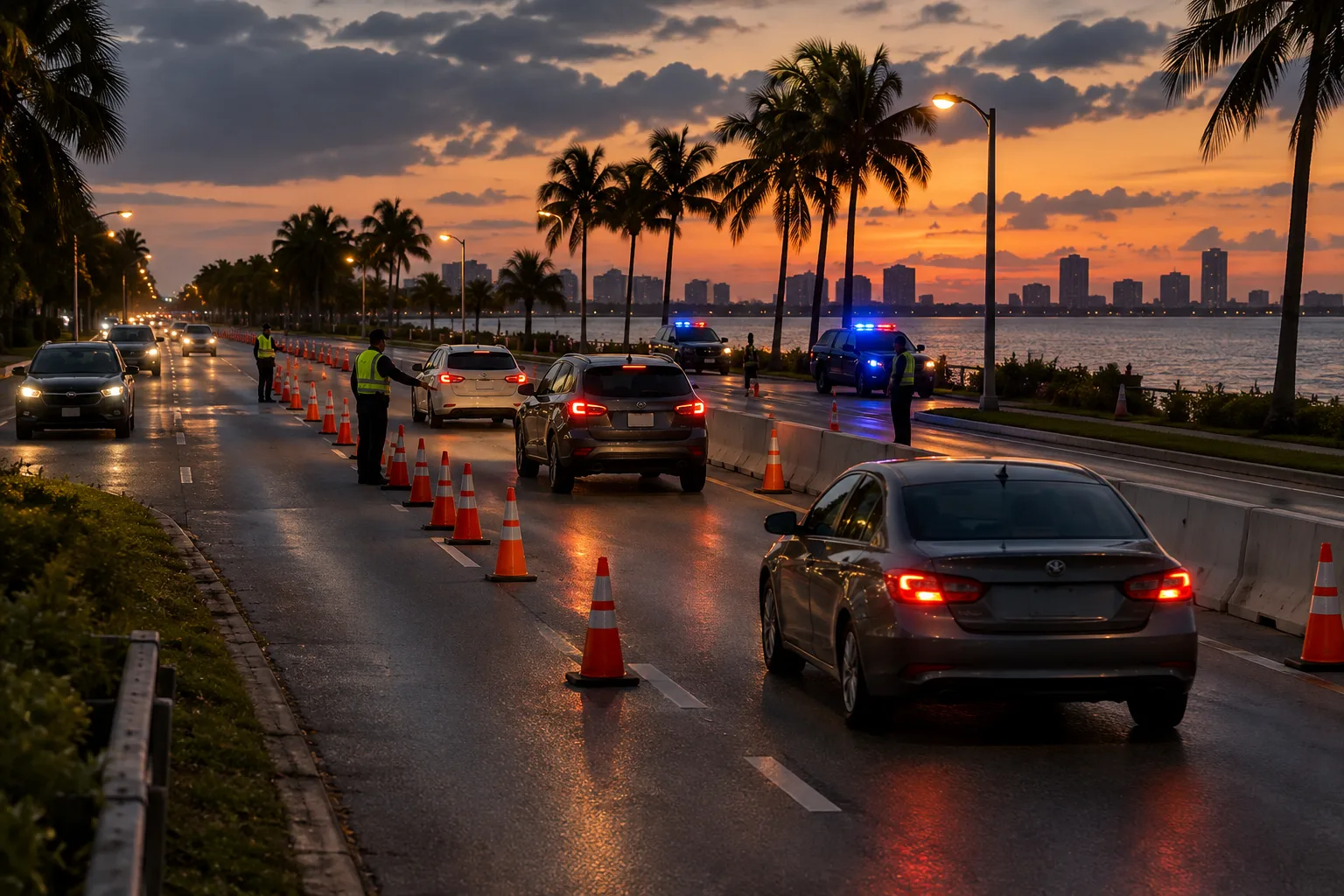
A driver heading through Fort Lauderdale may encounter a line of vehicles, police lights, and a brief stop at a sobriety checkpoint. Florida DUI checkpoint laws allow some checkpoints, but that does not mean every setup or stop is automatically lawful. The central issues can include who planned the checkpoint, whether officers used neutral criteria to select vehicles, and how much discretion officers had at the scene. Michael D. Weinstein, PA, helps readers understand these questions as part of the broader investigation that can follow a DUI stop. This article explains how checkpoint rules differ from an ordinary traffic stop, what officers may ask or observe, and which details about an encounter may be important to preserve. It also explains why a checkpoint’s location and selection pattern matter in Fort Lauderdale and Broward County.
How Florida DUI checkpoint laws differ from an ordinary stop
A routine traffic stop generally follows an officer’s decision to stop a particular vehicle based on an observed traffic or legal reason. A sobriety checkpoint works differently: police briefly stop vehicles under a planned screening procedure, even when an officer has not first observed a violation by each driver. Because that initial detention affects motorists who have not been individually selected based on suspicion, courts examine how the checkpoint was designed and operated.
The Florida Supreme Court has recognized that sobriety checkpoints can be constitutional when safeguards limit discretion and the intrusion on drivers is reasonable. In State v. Jones, the court considered checkpoint safeguards under the Florida Constitution. The decision does not make every checkpoint lawful. The actual plan and its implementation matter, and a court may assess the circumstances of a particular stop.
Why neutral vehicle-selection procedures matter
A plan may use an objective pattern, such as stopping every vehicle or vehicles at set intervals. The important point is that officers at the scene should not have open-ended discretion to pick drivers arbitrarily. Supervisory personnel should determine key procedures, including the checkpoint’s location and operating plan, rather than leaving those choices entirely to individual officers at the scene.
A driver’s recollection of the sequence can help frame questions about whether a neutral procedure appeared to be followed. Concerns about a checkpoint’s selection method are related to, but not automatically the same as, broader Florida traffic-stop concerns involving racial profiling. Neither a perceived irregularity nor a concern by itself resolves the legal issue; the facts and governing standards need to be evaluated together.
What to note about a Fort Lauderdale checkpoint encounter
Details that seem minor during a brief stop may help explain later how the checkpoint operated. If it is safe and practical to do so after the encounter, a person may want to make a factual note of what they remember. Useful details can include:
- Where the stop occurred: Note the road, nearby intersection, direction of travel, and approximate location in Fort Lauderdale or elsewhere in Broward County.
- How vehicles were selected: Recall whether all vehicles appeared to stop, whether there was an apparent interval or pattern, and whether officers seemed to depart from it.
- How the checkpoint was presented: Remember visible police presence, lighting, cones, signs, and whether traffic was directed into a specific lane. These details do not alone establish legality, but they help describe the setting.
- How long the encounter lasted: Recall whether the initial screening was brief or whether questioning or other investigation extended the stop.
- What was said or observed: Record the questions asked, answers given, and any comments officers made about driving, speech, appearance, or behavior.
An officer’s observations may lead to additional DUI investigation. A breath result below a particular threshold does not necessarily answer every question about alleged impairment; how Florida DUI cases can rely on impairment evidence below .08 provides related context. The significance of any observation depends on the full circumstances, not one detail taken alone.
When a checkpoint stop leads to more investigation
A checkpoint screening and a later investigative step are not necessarily governed by identical questions. If officers move from a brief checkpoint stop to additional questioning, field sobriety exercises, a breath test, or a vehicle search, the reason for and timing of each step may matter. A record of the sequence can help an attorney assess whether the encounter remained within the checkpoint plan or developed into a separate investigation.
For example, if officers ask to search a vehicle or conduct a search, the legal basis for that step is a distinct issue from whether the checkpoint itself used neutral selection criteria. A dog sniff or alert may raise additional questions about the length of a detention and the justification for a search; see when a K-9 alert may matter in a Fort Lauderdale vehicle search. A checkpoint does not, by itself, answer whether a later search was lawful.
In Fort Lauderdale, DUI matters may proceed through Broward County courts, depending on the case and applicable jurisdiction. A lawyer reviewing a checkpoint-related case may examine available reports, video, dispatch or operational records, and the stated checkpoint plan, where those materials exist and are obtainable. The review may compare the written procedures with what officers did, while considering the duration and scope of the encounter. Laws and procedures can vary by location and may change; this article addresses general Florida principles, not a ruling on any individual stop.
Frequently Asked Questions
Are sobriety checkpoints automatically legal in Fort Lauderdale?
No. Florida courts permit sobriety checkpoints when constitutional safeguards are met, but legality depends on the plan and how officers carried it out. Relevant considerations may include supervisory planning, neutral vehicle-selection criteria, limits on officer discretion, and the scope of the detention. The fact that a stop happened at a checkpoint does not settle whether that specific operation complied with applicable law.
Can police stop every car at a Florida DUI checkpoint?
A checkpoint plan may call for stopping every vehicle or may use another neutral pattern. The method should be established as part of the checkpoint procedure, rather than chosen arbitrarily by officers as cars arrive. Whether the method was actually followed is a fact-specific question. The pattern a driver observed can be useful context, but it does not alone determine whether the checkpoint was valid.
What details should I remember after a DUI checkpoint stop?
Helpful factual details may include the exact location, direction of travel, visible checkpoint setup, how vehicles appeared to be selected, how long the stop lasted, questions officers asked, and what they said they observed. If the encounter continued into testing or a search, note the order of events. These recollections can help a lawyer assess the encounter, but their significance depends on the full record.
Can officers search my car at a sobriety checkpoint?
The checkpoint’s screening purpose does not automatically resolve whether a vehicle search is permitted. A search may raise separate legal questions about consent, a warrant, or another recognized basis, depending on the facts. The circumstances and timing matter, including whether the initial detention was extended. An attorney can evaluate the applicable Florida law and the particular facts rather than assuming that a checkpoint alone authorizes a search.
How Michael D. Weinstein, PA Can Help
Michael D. Weinstein, PA, is dedicated to helping people understand the issues that can arise in a Fort Lauderdale DUI investigation. A review may consider how the checkpoint was planned, whether the vehicle-selection procedure appeared neutral, what officers asked or observed, and whether the encounter expanded into further investigation or a search. The firm is committed to fighting for clients’ rights while evaluating each matter based on its facts and applicable Florida law. If you have questions about a checkpoint stop in Fort Lauderdale or Broward County, contact Michael D. Weinstein, PA, to request a free consultation or case evaluation.
The information in this article is for educational purposes only and does not constitute legal advice. Contact a qualified attorney authorized to practice in the jurisdiction that applies to your matter for advice specific to your situation.