
A call from a school, police agency, or juvenile intake office can leave a parent or guardian unsure what happens next. When a minor is accused of possessing or otherwise being involved with drugs, the case may follow Florida’s juvenile justice process instead of the adult criminal court system. Understanding the difference matters: the allegation, court notices, and decisions about detention or services can each affect what happens next.
For families in Fort Lauderdale, juvenile drug charges in Broward County are generally handled through a system focused on minors, but that does not mean the accusation is informal or consequence-free. Michael D. Weinstein, PA helps families understand the issues that may arise in a drug case and the importance of reviewing the actual paperwork. This guide explains how juvenile proceedings can differ from adult court, what parents should look for in notices and allegations, and where legal guidance may fit.
How juvenile drug charges in Broward County can differ from adult cases
A juvenile drug allegation typically enters Florida’s juvenile delinquency system. In Broward County, juvenile matters are handled within the 17th Judicial Circuit, while the Florida Department of Juvenile Justice (DJJ) has a role in areas such as intake screening and supervision. The process is not simply an adult criminal prosecution with a younger defendant. It has different procedures and may focus on accountability, services, supervision, and the young person’s circumstances.
That distinction does not mean every case ends in a particular way or that the allegation should be treated lightly. A juvenile case can involve court appearances, conditions, services, or other consequences. The exact path depends on the alleged conduct, the young person’s history, the available evidence, and decisions made by the relevant authorities and court.
What the juvenile process may consider
After an allegation is reported or an arrest occurs, intake screening may help determine how the case proceeds. Depending on the facts and eligibility, options may include diversion or a formal court case. If a minor is detained, a separate detention decision may be made under juvenile procedures; parents should read any related notice carefully. For more on a parent concern in this setting, see information about parents being billed for juvenile detention.
Juvenile proceedings and records are subject to rules that differ from adult cases, but families should not assume every record is automatically sealed or inaccessible. A lawyer can explain what rules apply to the specific case and what a notice requires.
What parents should check in the allegation and court notices
Start by identifying what the paperwork actually says. A drug-related incident can lead to different allegations, and the language matters. A possession allegation is not the same as an allegation involving an object, sale, or trafficking. For a related explanation, read about the difference between drug possession and trafficking allegations.
Parents and guardians can organize the information they receive and note questions for a lawyer. Useful items to review may include:
- The specific offense or conduct alleged, and whether the paperwork refers to a controlled substance, paraphernalia, or another claim.
- Any court, intake, or detention notice, including the date, time, location, and instructions stated on it.
- Where the substance or item was found, who had access to that location, and what the minor is alleged to have known or controlled.
- Whether the incident involved a school or another location that may raise an additional legal issue.
An item alleged to be drug paraphernalia can raise issues distinct from possession of a controlled substance. Parents can review how Florida treats a separate drug paraphernalia allegation alongside the exact wording on the case paperwork.
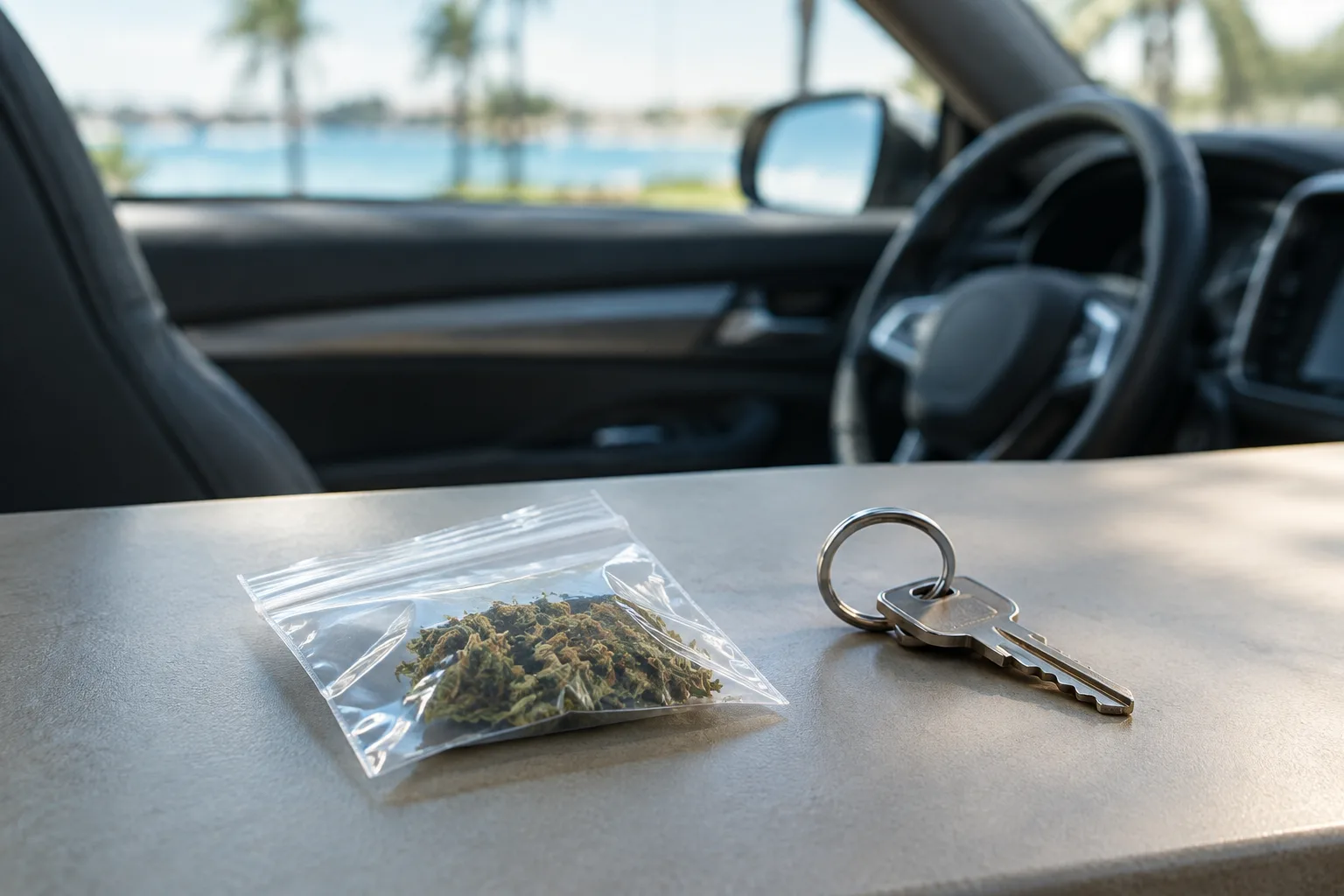
Location alone does not necessarily establish who possessed a substance. If drugs were found in a shared vehicle or space, the evidence and circumstances matter; see how drugs found in a shared car may affect a possession allegation. Similarly, being near a school does not by itself settle whether a school-zone allegation applies. The facts and legal requirements should be reviewed, including Florida’s requirements for a drug-free school-zone allegation.
What to expect after an arrest—and how to avoid confusion
A minor’s case may involve contact with law enforcement, juvenile intake, a detention decision, and court proceedings, but the order and details depend on the circumstances. If a family receives a notice, the stated instructions and dates deserve close attention. Missing or misunderstanding a required appearance can create additional difficulties, so a parent may want to clarify the notice with a qualified attorney or the issuing agency rather than make assumptions.
A juvenile has legal rights, including protections related to questioning. How those protections apply can depend on the situation, including whether the minor was in custody and what was said or done. A parent’s presence does not automatically answer every question about whether an interview was lawful. An attorney can evaluate the circumstances and explain the relevant rights under Florida law.
Families may feel pressure to quickly explain an incident or resolve disagreements about what happened. Before relying on informal accounts, it can help to distinguish what is known from what is alleged, keep copies of notices, and avoid treating social media or secondhand statements as a substitute for the case record. These are general organizational steps, not legal advice about what any particular family should do.
In some circumstances, Florida law permits a juvenile matter to be handled in adult court. That is not the ordinary assumption for every minor drug allegation, and whether adult-court treatment is possible depends on the law and case-specific factors. A lawyer familiar with juvenile drug defense in Fort Lauderdale can assess the potential process, explain court notices, and help a family understand available options without assuming a particular outcome.
Frequently Asked Questions
Will a minor’s drug case go to adult court in Broward County?
Not automatically. Many cases involving minors proceed through Florida’s juvenile justice system, but Florida law allows some cases to be handled in adult court under specific circumstances. Whether that possibility applies depends on the allegation, the young person’s history, and other legal factors. A lawyer can review the actual paperwork and explain which process may apply in a particular Broward County case.
What should I look for on a juvenile court notice?
Review the notice for the date, time, location, instructions, and the agency or court that issued it. Keep a copy and note anything that is unclear. Notices may relate to different stages, including intake, detention, or a court appearance, so their meaning can vary. A qualified attorney can help explain the notice in context; this general information is not a substitute for advice about a specific case.
Can a juvenile drug case result in diversion?
Diversion may be available in some juvenile cases, but eligibility and terms depend on the allegation, the young person’s circumstances, and decisions made under the applicable process. It should not be assumed to be offered or to produce a particular result. Parents can ask a lawyer to explain whether diversion may be considered and what any proposed conditions would mean before making decisions.
Does finding drugs near a minor prove that the minor possessed them?
Not necessarily. The location of a substance is one fact, but possession allegations can involve questions about knowledge, access, and control. The relevant evidence and circumstances matter, especially if the item was in a shared vehicle or space. A lawyer can evaluate how those facts relate to the allegation under Florida law, rather than treating proximity alone as a complete answer.
How Michael D. Weinstein, PA Can Help
A juvenile drug allegation can raise immediate questions about the accusation, the paperwork, and what happens next. Michael D. Weinstein, PA is dedicated to helping families understand the criminal defense issues involved and is committed to fighting for a minor’s rights through a careful review of the circumstances. The firm can evaluate the allegation, explain how juvenile procedures may apply, and discuss questions about notices, evidence, and possible next steps. For families seeking Fort Lauderdale drug defense representation, contact Michael D. Weinstein, PA to request a free consultation or case evaluation.
The information in this article is for educational purposes only and does not constitute legal advice. Contact a qualified attorney licensed in Fort Lauderdale, Florida for advice specific to your situation.